

 2026.3.7 - 4.18
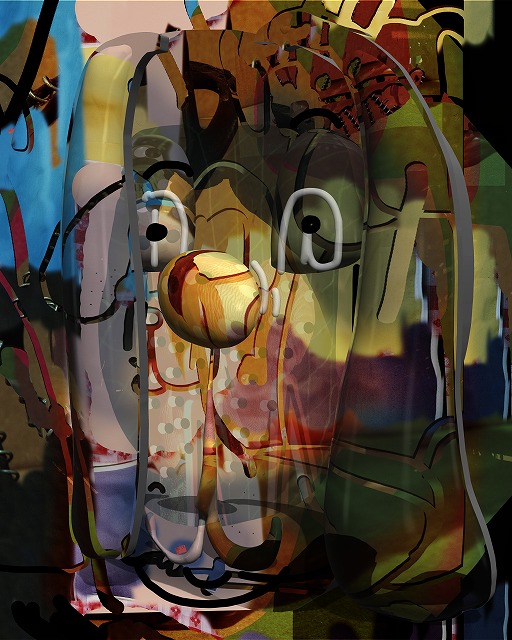
Date: 3.7 (Sat.) – 4.18 (Sat.), 2026
Gallery hours: Tue. – Sat. 11:00 – 19:00 (Closed on Mon., Sun., and National Holidays)
Opening reception: 1.10 (Sat.) 17:00 ~19:00
Artists: Busui Ajaw/ Lucas Blalock/ Gardar Eide Einarsson/ Justine Smith/ Tawan Wattuya
*Special exhibition of works by Leonard Tsuguharu Foujita
nca | nichido contemporary art is pleased to present the group exhibition The Right Way.
Featuring the work of six contemporary artists, Busui Ajaw, Lucas Blalock, Marcel Dzama, Gardar Eide Einarsson, Justin Smith and Tawan Wattuya, the exhibition aims to challenge mainstream, conventional notions that keep on crafting narratives pushing forward the idea of a “right way” of looking at the world. Whether by breaking free from the standard approaches that have been dominating the visual language, giving voice to long-overlooked narratives, or simply trying to unveil the many implications -political, economic, societal - hidden beneath the surface, these artists urge us to look at things from new, refreshing perspectives, giving us the tools to redefine what “the right way” is, or better, to question the very existence of such a notion.
Busui Ajaw’s artistic experience heavily draws on the artist’s identity as a member of the Akha ethnic group, a nomadic people from the highlands of southeast Asia. Ajaw has developed an expressive, visual language that bridges that gap between seen and unseen, material and spiritual tapping into the Akha’s traditional beliefs and values. Her recent paintings have been significantly expanding on the artist being both a member of the Akha community and a mother, weaving together her own personal experiences and perspectives towards problems and issues affecting today’s society with the traditions and practices of her own people. Standing against mainstream narratives, Ajaw pushes us to question what we have been taught about identity, nations and borders.
Lucas Blalock’s approach has been strongly inspired by poet and playwright Bertolt Brecht who believed that theater should bring the offstage labor on stage through his work, encouraging a performance where the audience should be made not to feel but to think objectively. Likewise, Blalock makes a point in showing the process behind photographic images by shooting with a large-format camera on film and scanning his images before digitally altering them. By doing so, Blalock’s awkward alterations give life to surreal and darkly comic imagery which seems to be oozing a new sense of wonder every time the viewer approaches his work from a different perspective, simultaneously encouraged to take in such a multilayered narrative. It feels as if by addressing photography as, borrowing the artist’s own words, “an act of drawing, a way to try to understand the world through making a picture of it”, Blalock is pushed to investigate the limits and inherent contradictions of such a medium while facing head-on the challenges of its rapid and constant evolution.
Marcel Dzama’s work brings to life surrealistic worlds where humans, animals and hybrid creature coexist together, his special creatures portrayed while engaged in both ordinary and odd situations. Dzama’s drawings seem to have been torn out of the artist’s sketchbook, resembling the size of a notebook, with their simple outlines and muted colors. Drawing heavily from Dadaist and surrealist traditions, as well as from folk and mythological tales, Dzama has been exploring themes such as politics, rebellion, and absurdity, all wrapped in dark, quirky humor.
Through a versatile artistic practice that spans across a multitude of genres - painting, sculpture, collage, silkscreen, and installation - Gardar Eide Einarsson has been exploring the intricate relationships and power structures existing in contemporary societies, affecting their social, political, and economic balance. The puns and word games, along with the decontextualized visual signs and symbols largely employed by the artist, represent Einarsoon’s humorous take on social structures, delivered through a sharp analysis of fundamental aspects - such as culture and history - and how they interact with each other. Through his approach, Einarsson wants to unveil the often overlooked, more complex, layered reality of what we deem mundane and normal where universal fears and conflicts lay hidden beneath the surface.
To borrow the artist’s words, money has always been a primary material in the work of Justine Smith. Catching Smith’s attention is the layered reality it embodies, touching almost every aspect of our lives. While on a physical level it is indeed just a piece of paper, its implications, power, capacity to affect and alter political agenda in our capitalist world, or, to put it simply, what it represents is quite central. Incorporating images of guns, bullets, military weapons and political figures, Smith questions our relationship with money and the value systems it entails as oftentimes it is the hidden driving force behind violence and conflicts. The physical beauty of these banknotes is played with and enhanced, creating a highly seductive work, a metaphor standing for both the alluring power money can entice and the moral dilemma it may pose.
Tawan Wattuya is known for his sharply thought-provoking, unique watercolor drawings, often featuring portraits and representations of animals. The exhibition showcases a selection of works from Wattuya’s Money series which the artist has been working on since 2020. Wattuya recreates banknotes from all over the world as enlarged watercolor versions: each faithfully preserving the specific, unique features of the original currency, they are now forged into new images thanks to the fluid properties of watercolor. The ambiguously blurred, smudged representations provide a look into how the world is changing, where banknotes are deemed as mere paper, losing their original value. At the same time, faithfully displaying the doodles and hand-written notes scribbled on the original banknotes, they also become the vessel of more intimate, individual narratives. A global economic instability deeply affected by conflicts and natural catastrophes; inflation; currency exchange rates that reflect the economic conditions of each country - these are just some of the layers hidden in the background of Wattuya’s drawings while also bringing to the fore the different identities of each country, challenging the very concept of what we deem valuable nowadays